
 Global
  English
  Español
  Português
  Deutsch
  English
  Français
  Italiano
  Español
  Nederlands
  Polski
  Čeština
  AE-English
  AU-English


When companies such as BMW, Bossard, MISUMI, YKK, Fiege, DHL, or Hellmann automate their warehouse processes, the focus is rarely limited to individual systems or technologies. They need solutions that can meet demanding requirements for performance, availability, and flexibility while fitting into existing structures. And although the individual processes may differ considerably, the same questions come up again and again when it comes to warehouse automation software. How can different automation technologies be connected reliably? How can existing systems remain in use while new components are added later? And how can the architecture remain open enough to avoid dependence on individual vendors or isolated technical solutions? Five key principles can be derived from EPG projects with leading international industrial and logistics companies. They show what matters when planning and developing automated warehouses and the role that WMS, WCS, vendor-independent integration, and scalable software architecture play in the process.
Warehouse Automation Software
Many warehouses today combine systems from different manufacturers and different generations. An existing conveyor system may be expanded, additional warehouse areas automated, or mobile robots introduced to handle transport tasks that were previously performed manually. With every new component, the demands placed on the control environment also increase. Companies therefore need to address early on how new automation technology can be integrated into existing processes. Inventory and orders still need to be managed centrally, while different systems must be coordinated on the technical level. At the same time, choosing a particular technology should not mean that future expansions become disproportionately complex or expensive.
Projects involving major industrial companies and logistics service providers in particular show which factors become critical in practice. The following five principles provide guidance on how warehouse automation can be designed not only to support a single system, but also to evolve as requirements change.
5 Principles to Learn from BMW, Bossard & Co.
Principle 1. Automation must be planned around the entire process
Projects at BMW, Bossard, MISUMI, and Fiege show that warehouse automation cannot be considered effectively in terms of individual systems or process steps alone. New technology always needs to fit into the existing material flow and take into account what happens before and after the automated area. Otherwise, one process may become faster while the bottleneck simply shifts somewhere else.
For planning purposes, this means that before deciding on shuttle systems, conveyor technology, or mobile robots, companies should understand how the overall process works today, where performance is actually being lost, and how automation would affect adjacent areas. Only then is it possible to determine which technology offers the greatest benefit and how it should be integrated. The right warehouse automation software therefore has to support the overall process rather than optimize one isolated area.
Principle 2. Vendor independence is key to flexible warehouse automation software
Automation environments usually develop over many years and change along with the requirements of a site. Existing conveyor technology remains in use, new areas are automated, and additional systems are added over time. If the higher-level software is too closely tied to individual vendors, every expansion becomes unnecessarily complex and limits the choice of future technologies. For warehouse automation software, vendor independence therefore becomes a key requirement for long-term flexibility. A vendor-independent software foundation allows existing equipment to remain in operation while new systems are added without having to rebuild the entire control environment. This keeps the warehouse’s technical development open and gives companies the flexibility to choose the solution that best fits the respective process even years later.
Principle 3. Warehouse automation software needs a stable WMS foundation
The more automated a warehouse becomes, the more processes, systems, and data need to be brought together reliably. MISUMI, an international supplier of components for mechanical engineering and automation, demonstrates how important a powerful WMS becomes in this environment. At its European central warehouse in Frankfurt, EPG ONE WMS integrates a highly automated shuttle warehouse into the existing processes while also providing the foundation for connecting additional systems and applications. In highly automated environments, warehouse automation software and the WMS therefore need to work together as part of one coherent architecture. As automation expands, the WMS therefore needs to do more than support the systems currently in place. It should also provide enough flexibility for future expansion. New technology, additional interfaces, or modified processes can then be integrated without having to fundamentally redesign the existing system landscape every time the warehouse evolves.
Principle 4. Warehouse automation must be designed for change
The automation solution that is right today will not necessarily meet the same requirements five or ten years from now. Throughput volumes change, additional warehouse areas are added, new technologies become available, and existing systems may need to be modernized. Especially in long-term automation projects, the software should therefore support not only the current setup but also future expansion. Warehouse automation software should therefore be evaluated not only against today’s requirements, but also against how easily it can accommodate future technologies and interfaces. This requires an architecture that allows new technology and additional interfaces to be integrated without fundamentally rebuilding existing processes each time.
Companies that consider this future development from the outset create the conditions needed to expand automation step by step and make better long-term use of their investments instead of starting from scratch with every major change.
Principle 5. Warehouse automation software should be testable before go-live
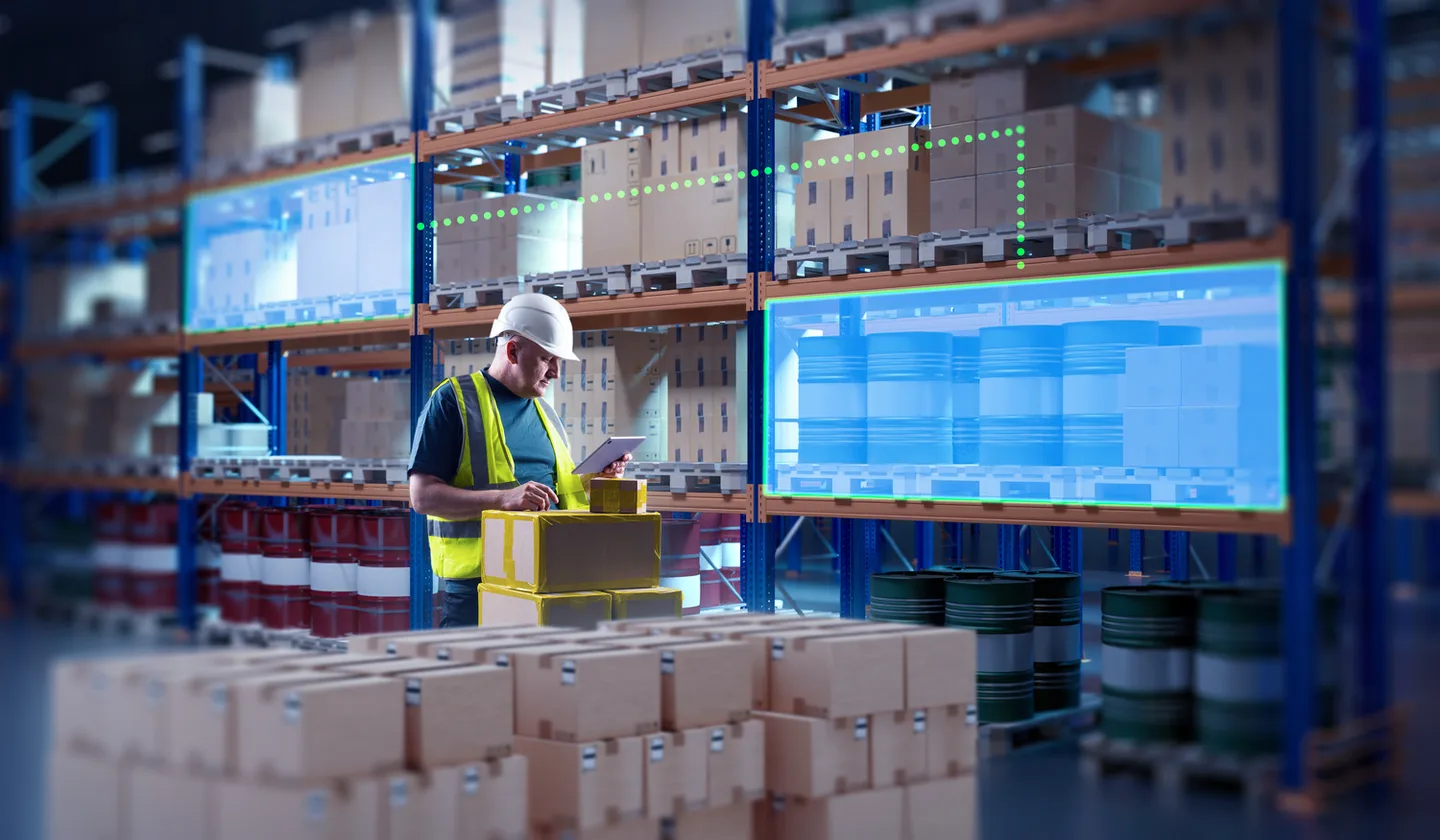
The more complex an automated warehouse becomes, the more difficult and expensive it is to identify errors only during commissioning. Emulation and digital twins make it possible to test material flows, interfaces, and control logic under realistic conditions before the system goes live. This allows companies to identify potential bottlenecks earlier, make adjustments, and prepare the actual commissioning process much more effectively. EPG uses a digital representation of the planned system for this purpose, enabling even extensive test scenarios to be simulated in advance. For warehouse automation software, this means that the interaction between systems and control logic can be validated before it affects live operations.
Bossard shows the impact this can have in practice. The Swiss specialist in fastening technology mapped its automation network using a 3D digital twin and was able to take a complex project from initial concept to implementation within six weeks. For larger automation projects in particular, virtual validation therefore becomes a tangible economic advantage because it can shorten testing and ramp-up phases while reducing interventions in ongoing operations.
Conclusion: Automation needs a software foundation that can grow with it
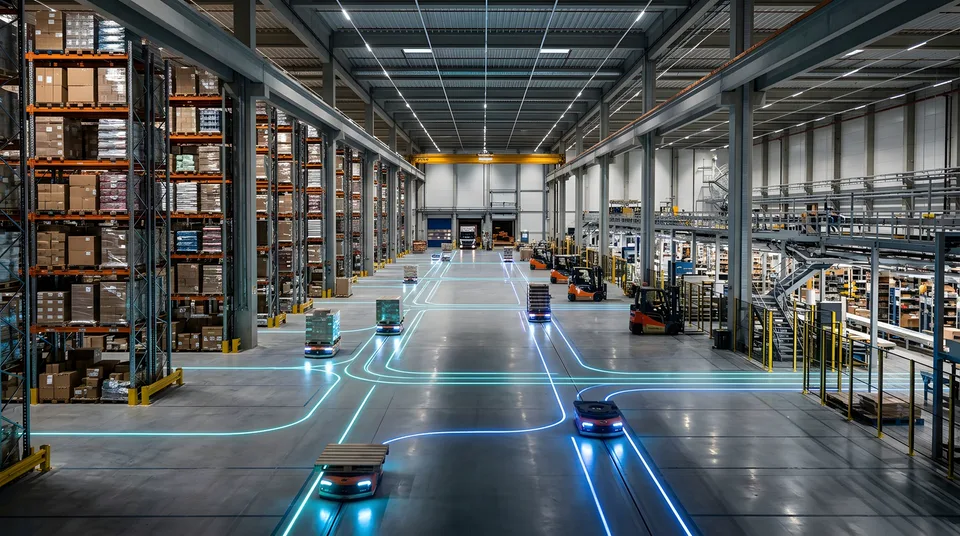
The five principles ultimately point to the same requirement: warehouse automation needs to evolve over many years without forcing companies to rethink their entire system landscape every time a new system is added. That requires software that considers the overall process, connects different technologies, and remains open enough to accommodate new requirements and systems. In other words, warehouse automation software needs to provide a foundation that can evolve together with the operation.
This is exactly what EPG ONE WMS and EPG ONE WCS are designed to support. EPG ONE WMS provides a stable foundation for inventory, orders, and warehouse logistics processes, while EPG ONE WCS enables the vendor-independent integration and control of automated material flows. Combined with digital twins, emulation, and open interfaces, this creates an environment in which existing technology can remain in use, new automation can be added step by step, and changes can be tested before they are introduced into live operations.
Next Steps: Review Your Automation Strategy
- Where are bottlenecks occurring in the overall process today?
- How easily can systems from different vendors be integrated?
- Is the WMS prepared for additional levels of automation?
- Can new technologies be added without fundamentally changing existing processes?
- Can planned changes be tested realistically before commissioning?
The answers quickly reveal where the existing software foundation is already well positioned and where action may be needed before moving to the next stage of automation.
If you would like to assess how your existing or planned automation environment can be developed further, talk to our experts.